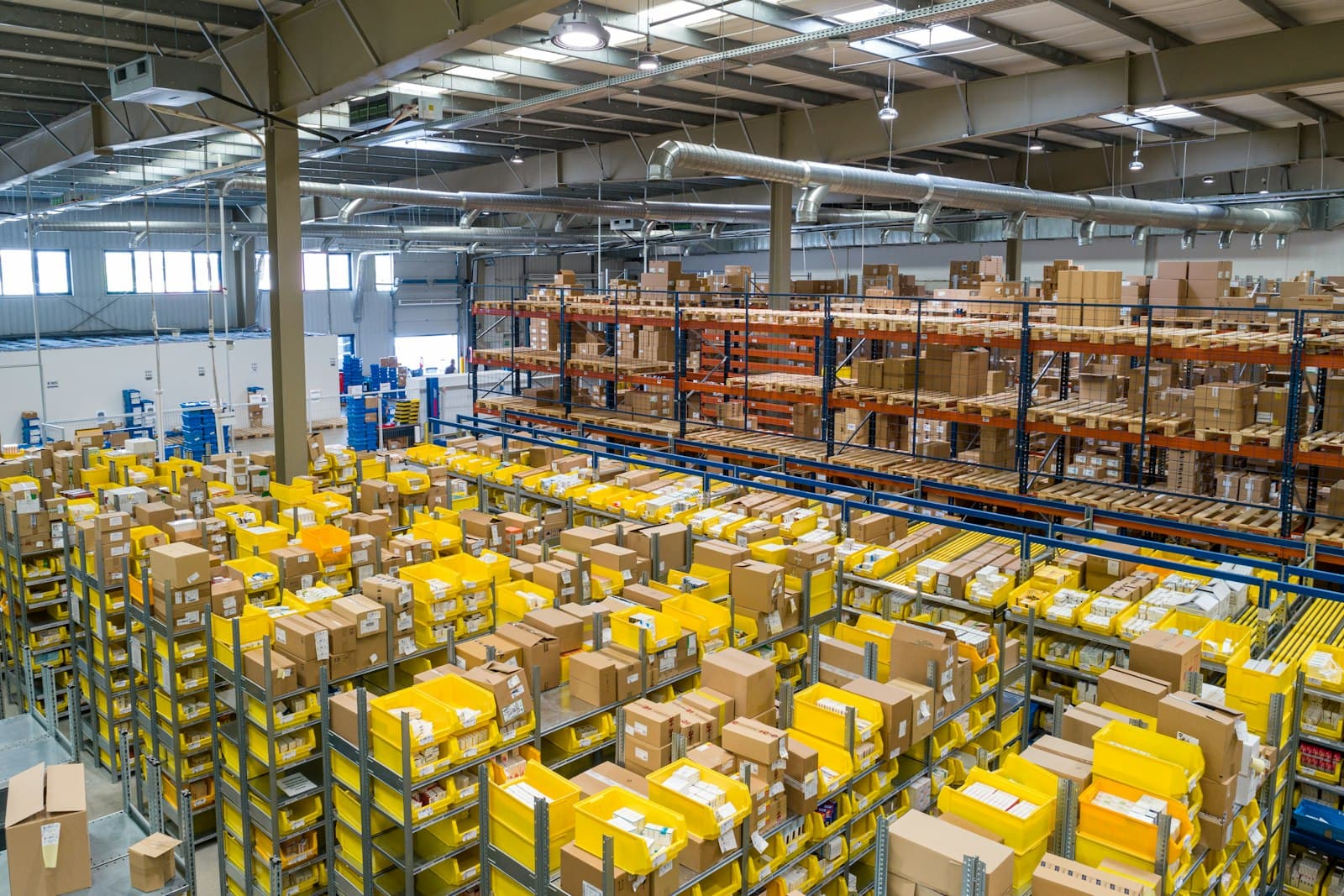
Over the past decade, supply chains have moved from a back-office function to a boardroom priority. Repeated disruptions have shown that optimizing purely for cost leaves organizations exposed to unexpected shocks. A network that looks maximally efficient in a normal year can become an organization's biggest liability the moment a serious disruption hits.
Real resilience is built on three layers: supplier diversification, real-time visibility into network data, and the ability to make fast decisions under uncertainty. Organizations that develop all three in parallel recover faster from crises. The key point is that these three layers need to grow together and stay coordinated — supplier diversification without adequate visibility into their performance just adds complexity without actually reducing risk.
The diversification layer doesn't mean every single item needs three suppliers — that approach creates cost and management overhead disproportionate to the actual risk. A better approach is identifying truly critical items (based on production-stoppage impact, not just dollar value) and concentrating diversification investment on that limited, high-risk set.
The visibility layer is arguably the hardest to implement, since it usually requires data sharing with suppliers and logistics partners who aren't always eager for full transparency. But without it, a disruption at the second or third tier of the supply network — not just the direct supplier — often goes undetected until it's too late to act.
The third layer — fast decision-making — is more of an organizational issue than a technical one. Even with the best data and visibility, if switching suppliers or reallocating capacity requires several layers of management sign-off, the advantage of that data evaporates. Resilient organizations typically have a pre-defined threshold under which the operational team can act without chaining approvals.
A point that often gets overlooked is that resilience has a cost — carrying more safety stock, paying a second supplier to retain capacity, investing in monitoring systems. Organizations that manage resilience well treat this cost as a form of insurance, not discretionary spending to cut during cost-reduction cycles — and that mindset is precisely what sets them apart from competitors.
A common overcorrection after a painful disruption is diversifying every single item indiscriminately, regardless of its actual criticality. This drives cost up sharply while doing little to reduce the risks that actually matter, because the effort gets spread thin across items where a stockout would barely register with the customer.
A practical starting point for any organization beginning this work is a simple exercise: list the ten items whose unavailability would stop a production line or lose a major customer, and ask, for each one, whether the organization currently has real visibility beyond the direct supplier. In most organizations running this exercise for the first time, at least half the list comes back with no clear answer — which is itself the most useful finding.
Resilience metrics deserve a standing slot in the same governance cadence used for cost and service — reviewed quarterly alongside other supply chain KPIs, not relegated to a one-off risk workshop that gets held once and then forgotten.
At SCM LAB, we treat resilience design not as a one-time project but as an ongoing organizational capability that needs to be embedded into everyday decision-making processes — from how a new supplier gets selected to which metrics get reviewed in the monthly S&OP cycle.