Warehouse Slotting: Cutting Travel and Picking Time Through Better Placement
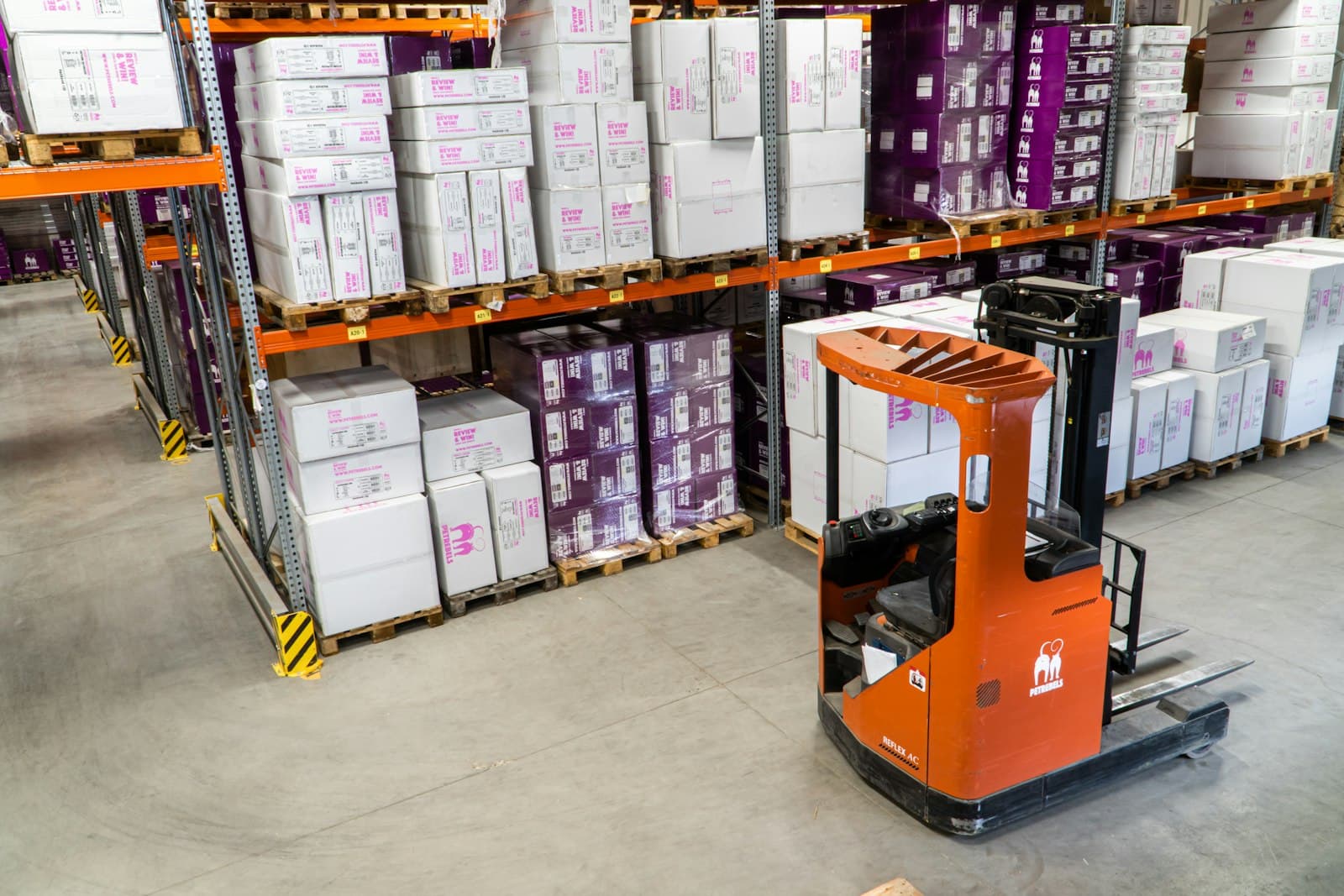
In many manual warehouses a large share of picking time is spent walking between pick locations, not picking itself. Slotting means deciding where each item is stored, and done well it cuts travel distance and picking time without buying new equipment.
The basic principle is to put the fastest-moving items in the nearest, most convenient locations: close to the packing or dispatch area, at a height between knee and shoulder for manual picking. Slow movers can sit in farther or higher locations. ABC analysis by number of picks (not monetary value) fits this better, because it is the number of visits to a location that determines distance travelled.
Beyond velocity, several other factors matter: size and weight (heavy items near the floor, light items higher), shape and packaging, compatibility (separating chemicals from food), and affinity between items. Items often ordered together reduce travel on a multi-line order if kept close. A simple co-order analysis on past order data reveals these patterns.
Slot size matters too. A fast mover in a small slot needs frequent replenishment, and replenishment work disrupts picking. The balance between replenishment frequency and space occupied can be estimated with a simple analysis of weekly usage and slot capacity. Sometimes two locations for a fast mover (a pick location and a backup reserve) work better than one large slot.
A common mistake is setting the layout once and forgetting it. Demand patterns are seasonal and shift over the year; an item that was fast this year becomes slow next year. A seasonal review, or at least twice a year, with fresh velocity data is needed. Of course every move costs labor, so move only items with a significant gap between their current and ideal position.
Another mistake is prioritizing putaway convenience (an empty slot near the entrance) over picking convenience. At receiving, a handy empty slot is tempting, but if a slow item takes the best location its cost is paid on every pick. The slot-assignment rule should be explicit and written into the system or procedure, not left to each operator's judgment.
A practical starting point: identify the 20 most frequently picked items of the last six months and see where they sit in the warehouse. If they are scattered or far from dispatch, moving just those few items usually gives the biggest effect at the lowest cost. Measure average travel distance per order before and after the change to see the impact.
Related Articles
- What Is Safety Stock and How Do You Calculate It? A Practical Guide for Planners
- Economic Order Quantity (EOQ): The Formula, Its Assumptions, and Where It Breaks in Practice
- ABC-XYZ Inventory Analysis: Setting a Different Policy for Different Items
- Warehouse KPIs: Picking Accuracy, Dock-to-Stock and Space Utilization